Think of the last time your child had to speak in front of a class. Some children stand up easily and start talking. Others go quiet, look at the floor and mumble through a sentence. Both kinds of children usually know the answer. The difference lies in how comfortable they feel speaking, and that is a skill that can be learned. If you are exploring public speaking classes for kids online India now offers, this guide will help you understand what these classes teach, when to start and how to choose a good one.
Why Speaking Skills Matter Early
Speaking well is not about being loud or dramatic. It is about organising your thoughts, saying them clearly and staying calm while others listen. Children who practise this early find it easier to answer questions in class, take part in group discussions, give presentations and speak up when something bothers them. These skills help in school, in interviews years later and in everyday life. Many parents notice that a child who learns to speak with confidence becomes more willing to try new things in general.
What a Good Public Speaking Class Teaches
A well-planned programme builds skills step by step instead of throwing a child on a stage. Early lessons usually focus on voice, such as speaking clearly, using a steady pace and varying tone. Children then learn body language, including eye contact, posture and gestures. After that, they practise structure, which means starting with a clear point, giving a few supporting ideas and ending with a short conclusion. Storytelling is another important part, because children find it easier to speak about something they can picture and enjoy. Role play, show-and-tell, short speeches, debates and presentations bring everything together in a fun and low-pressure way.
The Right Age to Start
There is no single perfect age, but children between about seven and twelve tend to benefit most from structured classes, since they can follow a simple structure and take feedback. The Reader Nest, for example, runs its public speaking course for children from seven years onwards. Younger children can build the base through storytelling, rhymes and conversation at home, even before they join a formal class. Teenagers also gain a lot, especially from practice with debates, interviews and longer presentations. What matters is that the class matches the child’s age, so a seven-year-old is not made to copy a teenage debate format.
How Online Public Speaking Classes Work
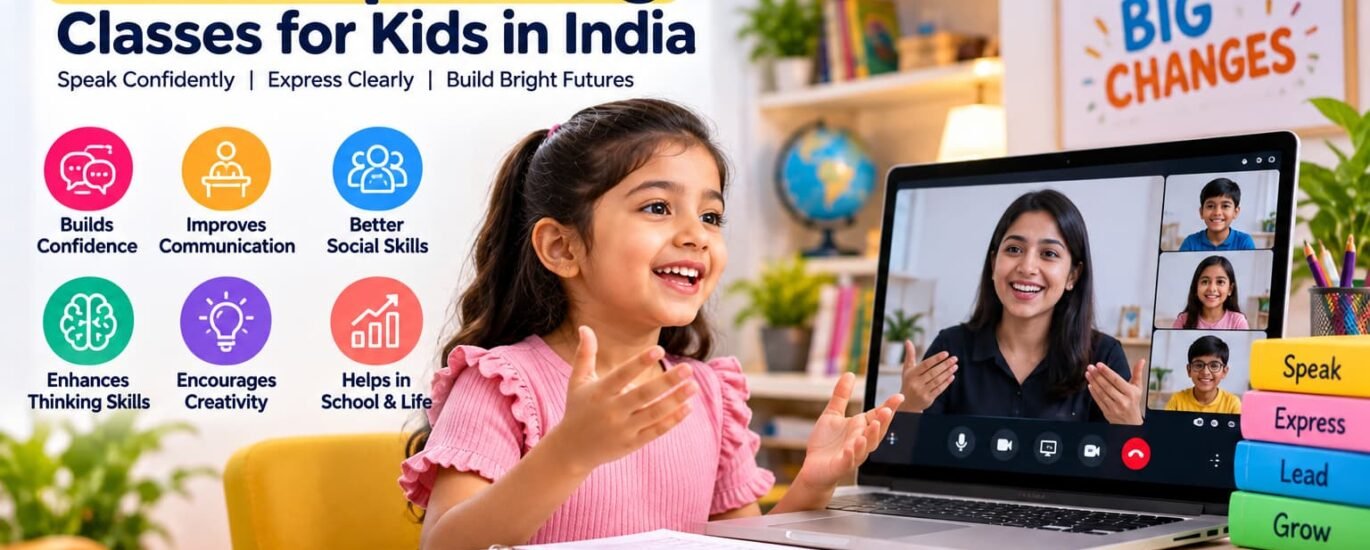
Online classes happen over a video call, usually in small groups, with a teacher who guides activities and gives feedback. Children might take turns telling a story, describing a picture, presenting a short talk or responding to a question. The teacher notes things like pace, volume and clarity, and gives gentle suggestions. Many classes also give short speaking tasks to practise at home. Online learning has some real advantages. Children speak from a familiar space, which can feel safer for shy kids, and families in smaller cities or abroad can reach good teachers without travelling. The challenge is that a child needs a stable connection, a quiet corner and the willingness to turn the camera and microphone on.
What to Look for Before You Enrol
Ask how big the groups are. Small groups mean every child speaks in every class, while a large group might leave quiet children unheard. Find out whether the teacher gives specific feedback instead of just applauding. Check how progress is tracked and shared with parents. Look at whether the programme is organised into levels with clear goals, and whether activities suit your child’s age. A free demo class is a good sign, because you can watch how the teacher handles a nervous child. Be careful with any promise of instant confidence or guaranteed stage performances. Real change in speaking comes from regular practice over months.
Helping a Shy Child
Shyness is not a flaw, and the aim is not to turn every child into a loud performer. Start small. Let your child speak to you about something they enjoy, such as a favourite game or a story they read. Give them time to finish sentences without interrupting. Praise effort and specific things, like “I liked how clearly you explained that,” instead of general comments. Avoid forcing a nervous child to perform in front of relatives. A calm, supportive class where mistakes are normal often helps more than pressure at home.
Practising at Home
Daily habits make classes work better. Ask your child to tell you about their day in three sentences with a beginning, a middle and an end. Encourage reading aloud, since it builds clarity and pace. Let them tell a bedtime story to a younger sibling or a stuffed toy. Record a short video of them speaking and watch it together, pointing out one thing that went well and one thing to try next time. Keep the tone light, because the goal is comfort first and polish later. If you want to see how adults practise the same skills in a structured way, organisations such as Toastmasters International offer a useful picture of what regular speaking practice looks like.
Try a Demo Class
The easiest way to see whether public speaking classes suit your child is to watch one. Notice whether the teacher is warm, whether the activities are age-appropriate and whether your child looks interested by the end. You can book a free demo class on WhatsApp and speak to the team about the right level for your child.