

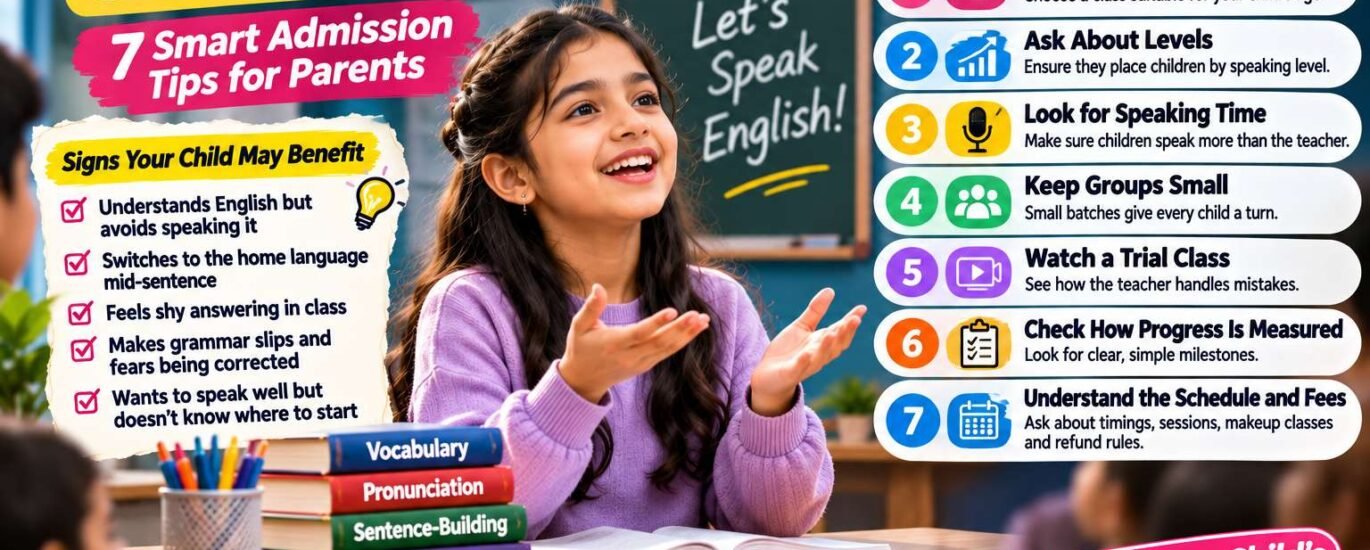
Your child understands English perfectly. Cartoons, stories, instructions, all fine. But ask a question and the answer comes out in two words, or not at all. That’s not a failure. It’s a confidence gap, and English speaking classes for kids are built to close it. Here are seven smart tips before you take admission.
Signs Your Child May Benefit
- Understands English but avoids speaking it
- Switches to the home language mid-sentence
- Feels shy answering in class
- Makes grammar slips and fears being corrected
- Wants to speak well but doesn’t know where to start
What Good Classes Actually Teach
A strong programme works on four things together: vocabulary, pronunciation, sentence-building and conversation. Children speak in every session through games, role-play, show-and-tell and storytelling, not just by listening to the teacher.
7 Smart Admission Tips
1. Pick the Right Age Group
Choose a class designed for your child’s age. A 6-year-old and a 12-year-old need very different activities.
2. Ask About Levels
Good classes place children by speaking level. A beginner placed with advanced speakers goes silent fast.
3. Look for Speaking Time
Ask how many minutes each child actually talks. In a good session, children speak more than the teacher.
4. Keep Groups Small
Small batches mean every child gets a turn and gentle correction.
5. Watch a Trial Class
See how the teacher reacts to mistakes. Kind, encouraging corrections build courage. Laughter at a child’s accent does lasting damage.
6. Check How Progress Is Measured
Look for simple milestones: new words used, longer sentences, speaking without hesitation. Vague promises don’t count.
7. Understand the Schedule and Fees
Ask about class timings, number of sessions, makeup classes and refund rules. Get them in writing.
Respect the Home Language
Speaking Hindi, Telugu, Tamil or any other language at home isn’t a problem. It’s an advantage. Children who are comfortable in two languages often learn English faster. Good teachers never shame a child for their mother tongue.
Supporting Your Child at Home
Talk in English for 15 minutes a day about simple things: breakfast, school, the weather. Parents can also explore Cambridge English’s speaking activities for children to find fun ways to improve their child’s English communication and speaking confidence.
4 Costly Mistakes to Avoid
- Expecting fluency in a few weeks. Real confidence takes months.
- Comparing your child with a cousin. Every child progresses differently.
- Choosing a class that only teaches grammar rules. Speaking needs speaking.
- Ignoring your child’s mood. If they dread class, talk to the teacher quickly.
Free Practice Resources
For free songs, stories and games that support spoken English, the British Council LearnEnglish Kids website is a handy extra at home.
Next Step
To explore classes and ask about joining, visit The Reader Nest and see what’s currently available.
Final Word
English speaking classes for kids work best when they’re warm, small and full of real conversation. Choose a patient teacher, a suitable level and a plan you can stick to. Confidence grows one sentence at a time.