Plenty of children can speak Hindi easily at home but struggle when they see it on paper. A letter looks familiar, yet the matra changes the sound, and a long word with a joined letter feels like a puzzle. For families in India, this gap shows up in school. For families abroad, it can mean children growing up without being able to read the language their grandparents speak. If you are looking at Hindi reading and writing classes for kids online, this guide explains what children actually learn, when to start and how to pick a class that works.
Why Hindi Literacy Still Matters
Hindi is a school subject for most children in India, and strong reading skills help in every other subject too, because reading is reading in any language. For families who live overseas, Hindi is also a bridge to relatives, stories, films and culture. A child who can read Hindi can enjoy a story from a grandparent’s bookshelf or read a message from a cousin. Children who start to read comfortably in two languages tend to build more flexible thinking and a deeper feel for how language works.
How Children Learn to Read Hindi
Hindi uses the Devanagari script, which is largely phonetic. A letter usually has one clear sound, which makes it easier to decode than a language with many spelling exceptions. Children generally move through a clear sequence. First comes the varnamala, the set of vowels and consonants, learned through sound, shape and picture clues. Next are matras, the vowel signs that attach to a consonant, and the barahkhadi chart that shows how one consonant changes with each matra. Then come simple two- and three-letter words, followed by longer words, conjunct letters (the joined letters that often confuse children), and finally sentences and short stories.
If your child is also learning English sounds, the same idea of blending sounds into words applies. Our guide to online phonics classes for kids explains this way of learning in English, and many parents find the Hindi process feels similar once they see it.
Learning to Write in Hindi
Writing is a separate skill from reading and takes more practice. Children learn to form each letter in the correct direction and proportion, and to place the horizontal line (shirorekha) on top of most letters so words look connected. Matras need to go in the right position, some before the letter, some after, and some above or below it. Early practice often uses tracing, dotted letters and short copy-writing exercises. Rushing this stage leads to sloppy habits that are hard to fix later, so slow, accurate writing is better than fast, careless writing.
The Right Age to Start
Many children begin Hindi letters between four and six years of age, after they have some comfort with sounds and pencil grip. Older children can start too, and they often move faster because they already understand how reading works. Children who have only heard Hindi at home may need extra time with letter shapes, so a gentle, repeated approach helps. The right moment matters less than the child’s interest. A playful start with songs, picture cards and simple words works better than a heavy drill.
What Online Hindi Classes Look Like
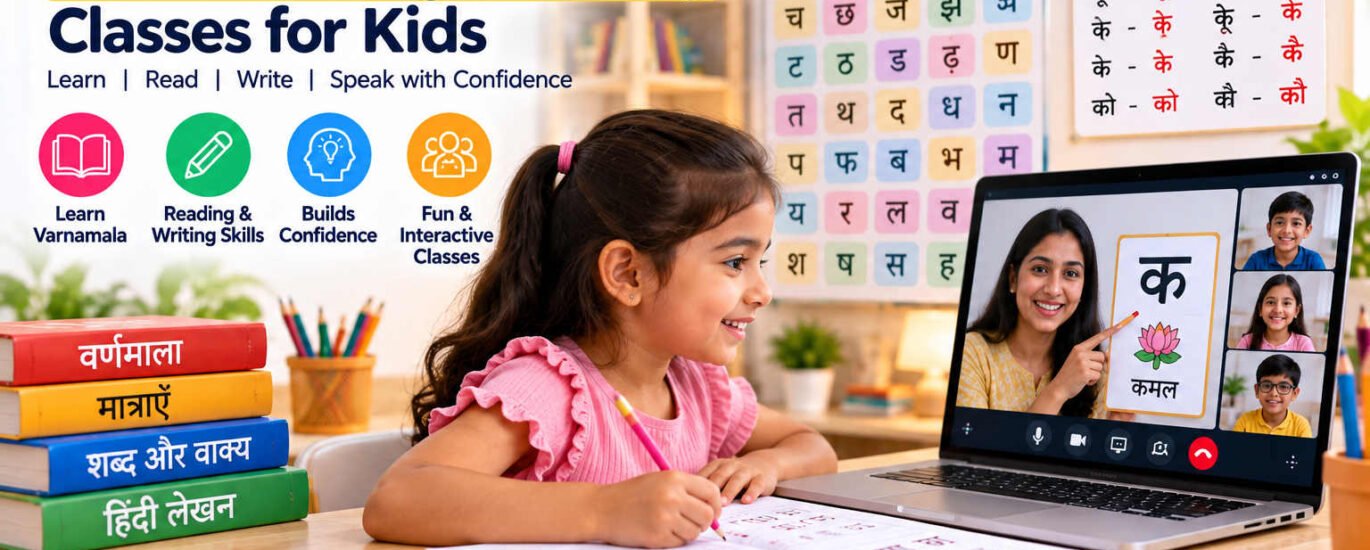
Online classes use a video call, a teacher, a shared screen and often a worksheet or workbook. The teacher shows a letter or matra on screen, says it aloud, asks the child to repeat it and then guides them to write it on paper while the camera shows the page. Good teachers correct stroke direction straight away and use games, stories and flashcards to keep younger children engaged. The Reader Nest offers its Hindi programme, Hindi Ki Pathshala, for children who want to build reading and writing skills step by step. Online learning also suits families abroad, since classes can run at times that match different time zones.
What to Check Before You Enrol
Ask whether the course follows a clear order, from varnamala to matras to words to sentences, and how long each stage typically takes. Find out whether classes are live, because a teacher watching your child write can fix mistakes at once. Ask about batch size, since smaller groups leave room for every child to read aloud. Check how progress is shared with parents and whether there is a regular review of what your child can do. A free demo is a good test: watch whether the teacher is patient, whether the child is interested and whether the pace feels right. Be careful with promises of fluent reading in a few weeks. Real progress takes steady practice.
How Parents Can Support at Home
You do not need to be a Hindi expert to help. Set a short daily slot, ten to fifteen minutes, for reading or writing practice. Keep a few simple Hindi picture books or children’s magazines at home and read one page together. Point out Hindi words on signboards, packets and screens. Ask your child to read a word aloud and tell you what it means. Praise effort and accuracy, and let mistakes pass without fuss. For children who feel Hindi is hard, short fun games with letter cards often work better than long worksheets. If you want to see what textbooks children use in school, the NCERT website offers Hindi books you can browse for free.
See a Class Before You Decide
The best way to know if a class suits your child is to sit in on one. Notice how the teacher explains matras, whether your child feels comfortable and whether the activities are age-appropriate. You can book a free demo class on WhatsApp and talk to the team about the right level for your child.
Publish se pehle: course ka naam “Hindi Ki Pathshala” maine aapki demo form se liya hai, par uski age range, duration aur batch size apni actual details se jod do. Agar aap chaho to article me kuch Hindi lines (jaise ek varnamala chart ya matra ka example) bhi daal sakte ho, isse article aur useful aur unique ban jaata hai. Copyscape se check kar lena.