Your child knows the answer. Hand goes halfway up, then drops. The assembly speech turns into a whisper, and the voice that never stops at home disappears on stage. This is painfully common, and it’s fixable. Public speaking classes for kids teach children to organise their thoughts, use their voice and stay calm in front of others.
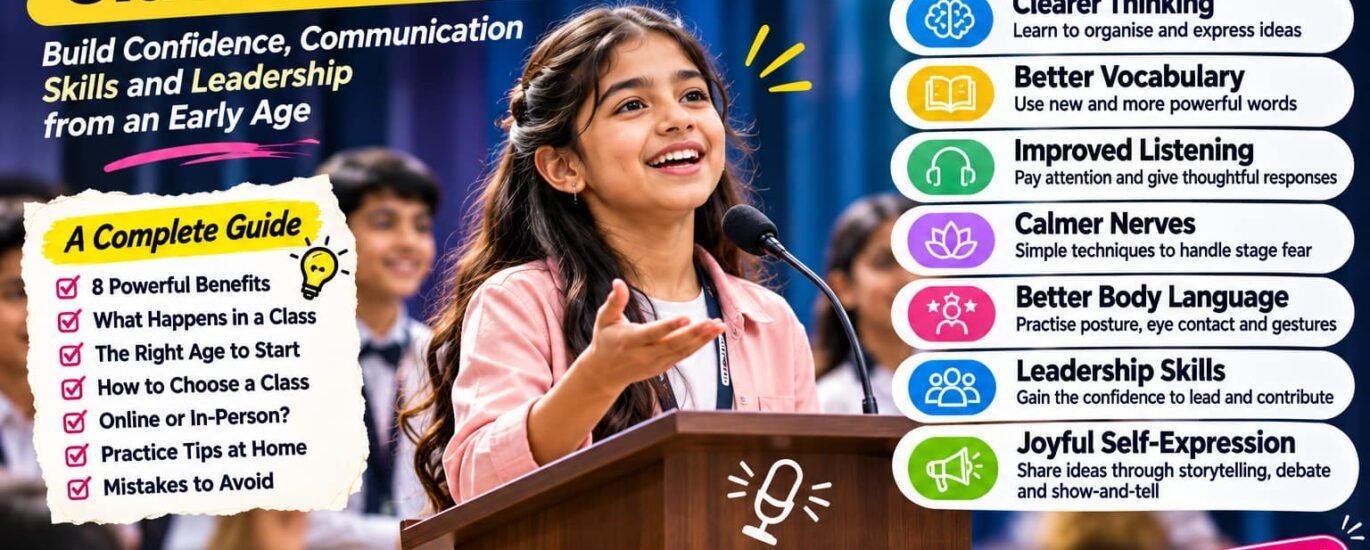
8 Powerful Benefits
1. Stronger Confidence
Speaking in front of a small, friendly group makes bigger audiences feel less scary over time.
2. Clearer Thinking
Speakers learn to plan a beginning, middle and end. That habit helps in essays and exams too.
Children can also develop planning, attention and self-regulation skills through regular activities. Parents can explore Harvard University’s guide to developing executive function skills in children for helpful learning activities.
3. Better Vocabulary
Children pick up new words because they actually use them.
4. Improved Listening
Good speakers listen well. Classes include feedback and Q&A, which sharpens attention.
5. Calmer Nerves
Children learn simple tricks, such as slow breathing and pausing, to handle fear.
6. Better Body Language
Posture, eye contact and gestures get gentle practice.
7. Leadership Skills
Children who speak up often lead group projects and school activities.
8. Joyful Self-Expression
Storytelling, debate and show-and-tell turn shy thoughts into shared moments.
What Happens in a Good Class
A strong class doesn’t throw a child on stage on day one. It builds up step by step:
- Warm-up games and voice exercises
- Short two-minute talks on simple topics
- Storytelling and role-play
- Gentle, specific feedback
- Group discussion and Q&A
- A small show-and-tell or presentation at the end
The Right Age to Start
Many children enjoy speaking classes from about 6 years onwards, with programmes adapted for younger and older groups. A shy child isn’t too shy. Often, they benefit most.
How to Choose a Class
- Small groups so every child speaks each session
- A kind, encouraging teacher who corrects without embarrassing
- Age-appropriate topics that children enjoy
- Clear feedback for parents after each month
- A trial session so your child can try before you commit
Online or In-Person?
Both can work. Online classes are convenient and comfortable for shy children. In-person classes give real stage practice. Some families try online first, then add in-person events later.
Practising at Home
Ask your child to tell you about their day in one minute. Let them present a favourite toy or book. Record a short video together and watch it kindly. Praise effort and clear points, not only perfection.
4 Mistakes to Avoid
- Forcing a shy child on stage. Pressure makes fear worse.
- Correcting everything at once. Pick one skill at a time.
- Choosing a class that only teaches memorised speeches. Real speaking is more than reciting.
- Expecting instant transformation. Confidence grows slowly.
Helpful Further Reading
Organisations such as Toastmasters International share well-known speaking and leadership tips that parents and older students often find useful.
Next Step
To explore classes and learn how to get started, visit The Reader Nest and see what’s currently available.
Final Word
Public speaking classes for kids don’t create performers. They help children believe their voice matters and give them tools to use it. Start small, stay encouraging and let your child grow at their own pace.