Your child can say the alphabet but freezes when a sentence appears. Homework takes forever. Story time ends in tears. If this sounds familiar, reading classes for kids can turn the struggle around. But before you fill in any form, it helps to know what to look for. This 6-step admission guide keeps things simple.
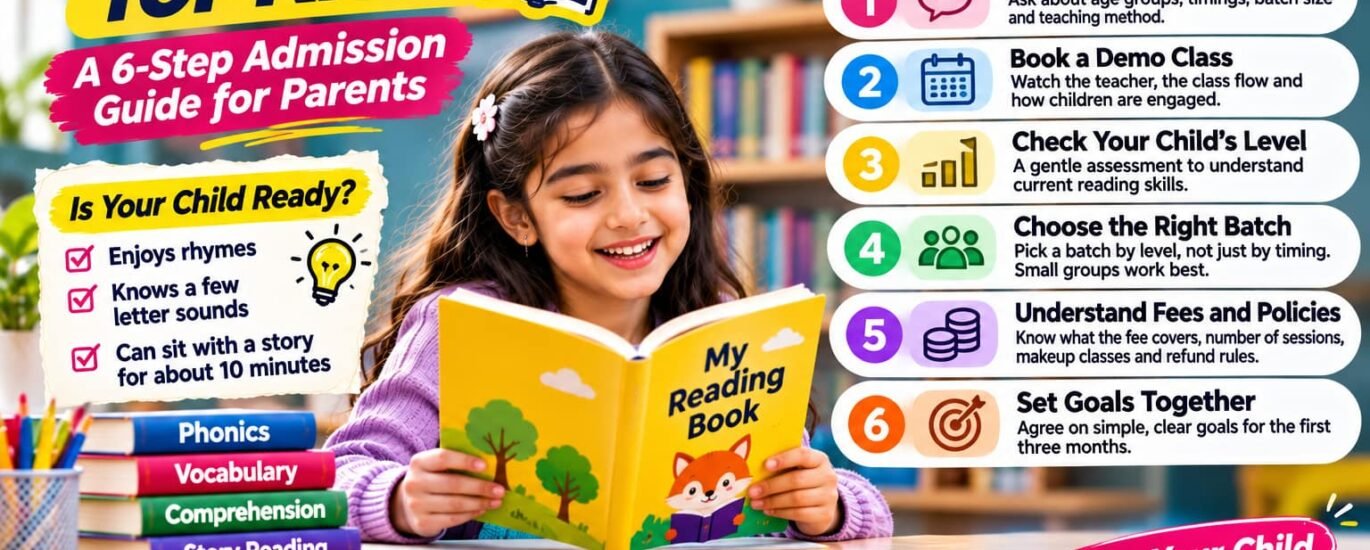
Is Your Child Ready?
Most children are ready once they enjoy rhymes, know a few letter sounds and can sit with a story for about ten minutes. Some start earlier, some later. Both are normal. A good class meets your child where they are and doesn’t force a race.
Step 1: Enquire and Ask Questions
Start with a call or message. Ask about age groups, class timings, group size and teaching method. A confident centre answers clearly and never rushes you.
Step 2: Book a Demo Class
Watch how the teacher talks to children. Look for warmth, patience and lots of reading aloud. A trial class tells you more than any brochure.
Step 3: Check Your Child’s Level
Good reading classes for kids begin with a gentle level check. It shows which sounds, words and sentences your child handles easily and where support is needed. Parents can learn more about early reading development through Reading Rockets’ guide to helping children become readers, which shares practical ways to support children’s reading skills at home.
Step 4: Choose the Right Batch
Pick a batch by level, not just by timing. A child placed too high loses confidence, and one placed too low gets bored. Small batches work best, so ask how many children join each session.
Step 5: Understand Fees and Policies
Ask what the fee covers, how many sessions it includes and what happens if your child misses a class. Get the refund and makeup-class policy in writing.
Step 6: Set Goals Together
Agree on simple goals for the first three months, such as reading short sentences, finishing a small storybook or reading aloud without fear. Clear goals keep everyone on track.
What a Good Reading Class Includes
- Phonics and sound practice
- Reading aloud with feedback
- Simple comprehension questions
- New vocabulary through stories
- Regular updates for parents
Questions to Ask Before You Enrol
- How many children are in each batch?
- How do you handle a child who falls behind?
- How will I know my child is improving?
- What should we practise at home?
- Can I see a sample lesson?
4 Mistakes to Avoid
- Choosing only by price. Cheap classes often mean crowded batches.
- Skipping the trial. You’ll regret it if the teacher isn’t a fit.
- Pushing too hard. Pressure makes reading feel like a punishment.
- Expecting overnight results. Steady progress beats quick promises.
Helping Your Child at Home
Read together for ten minutes every night. Let your child hold the book and point to words. Visit the library or buy a few easy picture books. Praise effort: “You tried so hard on that word!”
Useful Free Resources
For research-backed tips on how children learn to read, Reading Rockets offers helpful guides for parents and teachers.
Next Step
If you’d like to explore online options, visit The Reader Nest to see current programmes and enquire about joining.
Final Word
Admission to reading classes for kids should feel exciting, not stressful. Ask good questions, watch a trial, choose the right level and stay patient. A confident reader starts with one good decision.