My child cannot read
Many parents have worries about their child’s reading. Maybe they’re going to school, and their friends are reading storybooks, but they are struggling with basic words. You might be wondering what you’ve done wrong.
Don’t worry! You haven’t done anything wrong. There are many cases of children struggling to read, and it’s actually very common. This guide will show you why some children struggle, what signs to look for, and what you can do at home.
my child cannot read
What is a Struggling Reader?
A struggling reader is a child who finds reading much more difficult than expected. They may:
- Have poor knowledge of letter sounds
- Read very slowly or word for word
- Guess words from the pictures
- Forget words they learned the previous day
- Avoid reading or get upset about it
This doesn’t mean they aren’t smart. Often children who are bright and curious take a bit longer to learn how to read.
Signs Your Child May Be a Struggling Reader
Common signs include:
- Letters/sounds confusion (b and d)
- Difficulty blending sounds
- Skipping words or adding extra words
- Forgetting simple words despite lots of attempts
- Reading very slowly
- Avoiding books or saying they ‘hate’ reading
- Lack of confidence or frustration when doing homework
- Good understanding of stories but struggling to read.
It’s completely normal for a child to have 1-2 of these signs whilst learning to read. However, if they have many of these signs for months, then it’s worth putting some actions in place.
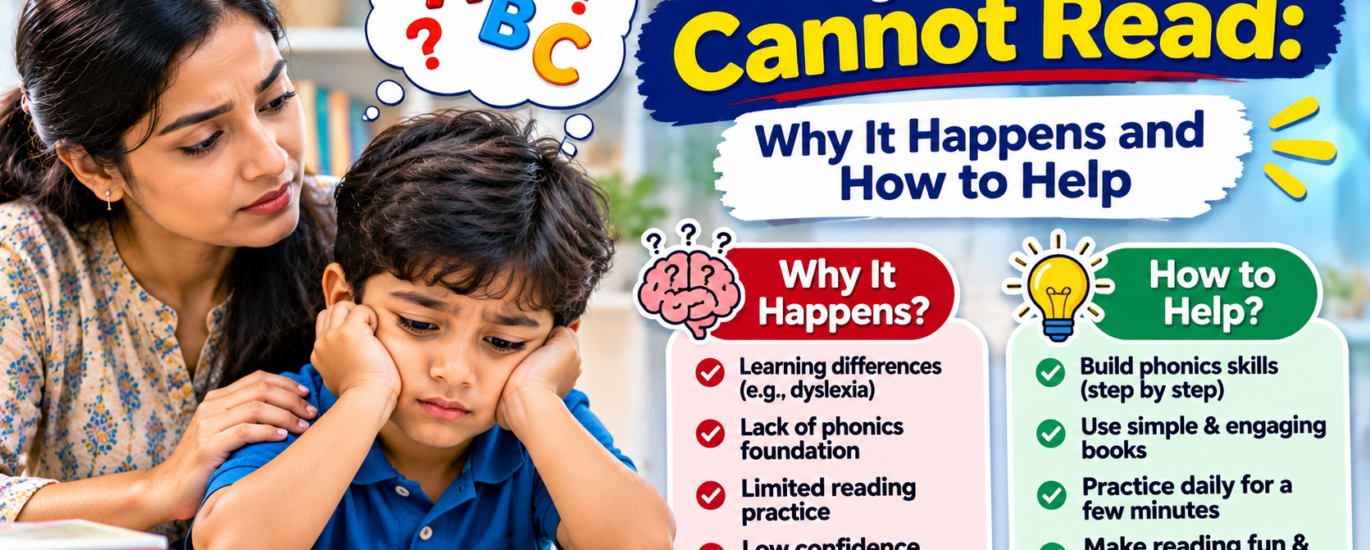
Common Reasons Why Children Struggle to Read
1. Poor Phonics Skills
If a child hasn’t learnt about letter sounds and how to blend them together, they’ll be guessing. This is a very common issue but an easy one to fix!
2. Not Enough Practice
If they don’t get to see books often or only read for a few minutes per week, they won’t have as much practice.
3. Limited Vocabulary
If they don’t know many words, it’ll be harder for them to read.
4. Low Confidence
If they’ve been told they’re wrong often or compared to others, they’ll be scared to make mistakes.
5. Difficulty concentrating
Little children struggle to pay attention and can become frustrated with long sessions.
6. Book is too difficult
A book with lots of new words can be very demotivating.
7. Visual or Hearing Problems
Occasionally children struggle with reading because they can’t see the words clearly or hear the sounds clearly. Getting them checked is an easy way to rule this out.
8. Learning Difference
Some children have a specific learning difference (dyslexia) which makes it harder for them to read. This can only be confirmed by a qualified professional. Don’t guess, but don’t worry either! With the correct support, they can make a big improvement.
How Old Should a Child Be When They Can Read?
Every child is different. Many children will start to read simple words between the ages of 4-6 and will improve over the next few years. However, schools can vary in when they start teaching reading. If they are just a little behind, don’t worry, but if they’re showing consistent problems and have several of the signs above it’s best to put actions in place early.
What To Do
1. Stay Calm
Children can pick up on your worries, so keep reading positive and calm. Try not to say things like ‘why can’t you read this?’ during reading sessions.
2. Get Checked
Get them checked for any visual or hearing issues.
3. Focus on Sounds
If they’re unsure about letter sounds, don’t push them to read full sentences. Start from the beginning:
- Teach them the initial sounds: s, a, t, i, p, n
- Make sure you’re pronouncing clearly with no ‘uh’ at the end.
- Add a movement and picture to go with the sound.
- Do a little revision every day.
4. Blending
Once they know a few letter sounds, get them to blend:
- Show them the word ‘sat’
- Slowly say each sound:/s/ /a/ /t/
- Slide them together: sss-aaa-t
- Say the word: sat
Start with simple words like sat, pin, tap, nap.
5. Use Simple Books
Use books with simple words they know. This will boost their confidence, and they’ll start to read.
6. Read Aloud
Read to them, take turns reading pages, or read a sentence together. This will show them how to read, and they’ll enjoy the stories.
7. Keep It Short
Only read for 10-15 minutes. It’s better to have a short, positive session.
8. Praise Them
Praise them for their effort. Don’t just praise them for getting the right answer. Say things like ‘I love that you tried that word!’ Add some stickers or a progress chart.
Simple Daily Routine (15 Minutes)
- 3 mins: Revision of known sounds using flashcards or a game.
- 4 mins: Blending and reading simple words.
- 5 mins: Read a short book with simple words.
- 3 mins: Discuss the story or play a word game.
Fun Activities
- Find items starting with a certain sound.
- Pull out an item from a bag and say the first sound.
- Build simple words using letter cards or magnets.
- Write in sand/salt.
- Hide word cards around the room and read them.
- Read to a soft toy. Many children feel less pressured reading to a toy.
- Play rhyming games. What words rhyme with cat, sun or ball?
Don’t…
- Compare them to siblings or classmates.
- Say it’s easy, just read it.
- Correct everything they do.
- Push them to read when they’re tired or upset.
- Use reading as a punishment.
- Skip phonics and move onto harder books.
When To Seek Professional Help
Speak to their teacher first. Then you could consider speaking to a paediatrician or educational specialist if:
- They have been practicing regularly for several months, and there hasn’t been much improvement.
- They are mixing up letters and sounds a lot past their early years.
- They are avoiding reading or getting very upset.
- They’re struggling with simple words and letter sounds.
- There have been reading issues in the family.
- Do you have any concerns about their attention, speech, or learning?
The sooner they get support, the better chance they have of improving with confidence. Seeking help shows you care!
How Online Reading Lessons Can Help
If you’re finding it difficult to practice at home, then an online live lesson can help. A good lesson will:
- Have a structured programme to teach them sounds, blending, words and sentences.
- Have small groups so they can talk.
- Be fun with games, stories and songs.
- Be kind with corrections and give regular feedback to parents.
How We Can Help At The Reader Nest
We offer live online lessons to help children build a strong foundation in phonics, reading, English and Hindi. Our Jolly Phonics programme (for children aged 3+) teaches the basics of reading with letters, sounds, blending, and simple words. The classes are interactive and led by experienced educators with flexible times for families in India and overseas.
All courses start with a free demo lesson.
Book your free demo on WhatsApp. Enter code TRN10 for 10% off.
FAQ
What should I do if my child can’t read?
Stay calm, get them checked, go back to letter sounds and blending, use simple books, and keep it short.
Why can’t my child read at 6/7?
There can be many reasons why. They may not have good phonics skills, not enough practice, low confidence or a learning difference. Speak to their teacher to find out the cause.
Are they?
Every child learns at a different pace, and schools start teaching reading at different ages. If there hasn’t been much improvement after regular practice, it’s best to get some advice.
Can struggling readers improve?
Yes! With the correct support, patience, and regular practice, many children will make a big improvement.
How can I make reading less stressful?
Keep it short, use books they enjoy, praise their effort, and avoid comparing them.
Do they have dyslexia?
Only a qualified professional can answer this. If you have any concerns, speak to their school and ask about an assessment.
How long should they be reading for?
About 10-15 minutes. It’s best to keep it short and positive.