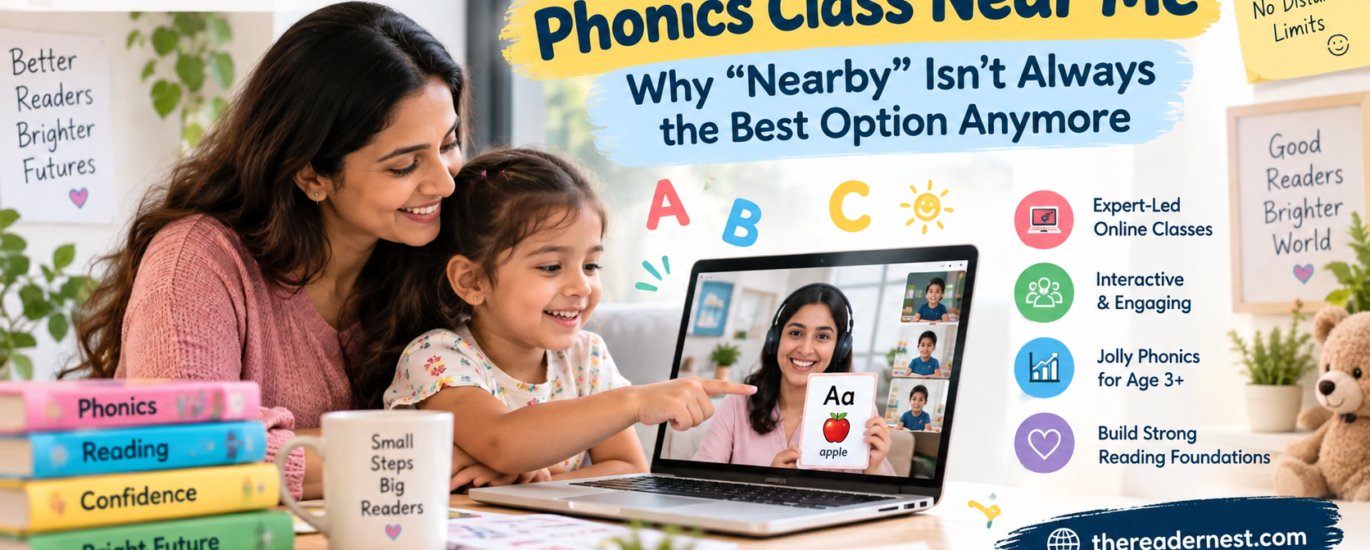
“Phonics class near me” is one of the most searched phrases by Indian parents once they notice their child struggling to sound out words. It’s a natural instinct — find someone local, someone you can meet, someone nearby. But the search often ends in disappointment: a handful of generic tuition centers, mixed reviews, or simply nothing available within a reasonable distance.
Why local options often fall short
Phonics isn’t the same as general tuition. It requires a teacher specifically trained in phonetic instruction — not just someone who’s good at English. In most towns, and even in many parts of bigger cities, that kind of specialised teaching is genuinely hard to find nearby. What’s available locally is often a general reading or English class that touches on phonics rather than building a programme around it.
There’s also the issue of consistency. A local tutor might be good, but if they fall sick, move, or get busy, your child’s learning stops with them. A single point of failure like that is a real risk when you’re trying to build a foundational skill during a narrow window in a child’s development.
Then there’s timing. Most local phonics or reading classes run on fixed schedules that were designed around the convenience of the centre, not around your child’s energy levels or your family’s routine. A class scheduled right after a tiring school day often does less good than one timed when the child is actually alert and receptive.
What changed the search
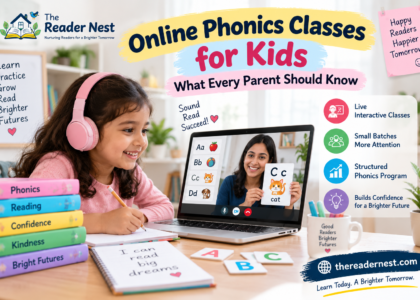
Live online phonics classes have quietly solved the “nothing good nearby” problem. Instead of being limited to whoever happens to teach phonics within driving distance, parents can now access trained instructors from anywhere — while still getting the same live, face-to-face teaching they were originally searching for. The teacher sees the child, hears them read aloud, and corrects pronunciation in real time — all the things that made in-person teaching valuable in the first place, just delivered over video instead of across a table.
This matters most for two kinds of families: those in smaller towns where specialised reading instruction simply isn’t available at all, and those in cities where the good local options are already full, prohibitively expensive, or inconveniently timed. In both cases, “near me” was never really the requirement — “available, qualified, and well-timed” was.
What to check instead of “how close is it”?
Once distance stops being the deciding factor, the questions that actually matter change.
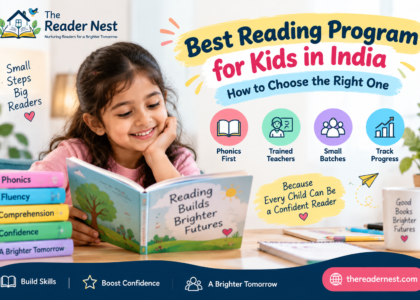
Is the class live, with a real teacher interacting with your child, or is it a recorded course dressed up as a “class”? Does the teacher have specific phonics training, not just general English fluency — these are genuinely different skill sets? Is the batch small enough for your child to get noticed and corrected in real time, rather than sitting quietly in a group of fifteen? And is there a clear, visible path from letter sounds to blends to full sentence reading, rather than a scattered mix of worksheets and activities with no real structure behind them?
It’s also worth asking how progress gets communicated. A good program should be able to tell you specifically what your child has learned and where they’re still struggling — not just hand over a generic completion certificate at the end of a term.
The trade-off is worth it
A “near me” phonics class might save a commute, but if it’s not built specifically for phonics, your child may end up needing a second, more specialised programme later anyway — which costs more time than it saved in the first place. A well-run online phonics class, chosen for the right reasons instead of just proximity, often gets better results in less time, simply because it’s designed around the skill your child actually needs, not around geographic convenience.
Where to look
If a genuinely good phonics class isn’t available in your area — or the local options don’t seem structured enough — it’s worth shifting the search from “near me” to “the right fit.”
The Reader Nest runs live online phonics classes designed specifically around this kind of structured, sound-by-sound teaching, with small batches and real instructors, so your child gets specialized instruction regardless of where you’re located.